Solitaire Story
- 4.9
- Rating
- 1.00M
- Installs
- Free
- Price

 Analysis by App-foxy
I usually know within a few days whether a solitaire game is going to become a useful little habit or disappear from my phone after the first burst of curiosity. Solitaire Story made a good first impression because it keeps the familiar card-game foundation easy to reach while giving each session a more purposeful feeling. It is a free card game from Solitaire Card Games Classic, rated for Everyone, and its central idea connects ordinary solitaire play with helping people in need.
That combination matters more than it may seem. Traditional solitaire already works well in short gaps, but it can also feel disconnected from everything else in your day. Here, the story and compassion theme give the routine a little emotional direction. I would not call it a replacement for a deep strategy game, and I would not choose it for competitive card play, but it has a clear identity beyond simply placing cards in descending order.
How Solitaire Story Holds Up Beyond the First Week
I find the best way to judge its staying power is to notice whether I reach for it during a particular kind of pause, rather than whether I can play for a long stretch. That distinction also helps me separate enjoyment of the card routine from any urge to spend: I can decide in advance what a satisfying session looks like and stop there.
You May Also Like

 Blood Strike: 2.5 Anniversary
Blood Strike’s Loadouts Turn Every Drop Into a Tactical Gamble
A close look at Blood Strike’s custom loadouts: how fast access to signature weapons reshapes its battle royale rhythm, rewards preparation, and narrows the gap between fights.

 Pandora - Music & Podcasts
Pandora’s Music Is Easy to Start, but Harder to Recover
Pandora’s strength is its low-effort path from a seed to a station. Its weak spot is how much confidence it asks you to place in connection, setup, and quiet recovery.

 8 Ball Pool
 Is Built on Rivalries, Rematches, and Routine
A close look at the rivalries, rematches, shared routines, and unanswered safety questions that turn a quick pool match into a persistent mobile community.

 Samsung Music
’s Quiet Strength Is Playing What You Already Own
Its reach comes less from spectacle than from dependable access to a personal library. That simplicity is both the app’s strongest retention engine and its ceiling.

 AccuWeather: Weather Radar
AccuWeather Review: A Quick, Clear Forecast for Everyday Decisions
For everyday plans, the best forecast is the one you can understand quickly. AccuWeather makes rain timing, radar, and local conditions easy to act on, with a few trade-offs.

 Hill Climb Racing
Why Hill Climb Racing Still Turns Crashes Into One More Run
A tiny car, a bumpy hill and one more upgrade: Hill Climb Racing keeps resurfacing because its simple chaos makes every near-miss feel personal.
More From Our News Desk



The first sessions are simple to understand
The strongest part of the opening experience is its accessibility. If you already know classic solitaire, you can begin without learning a complicated control system or studying a long rulebook. If you are returning to the genre after years away, the familiar structure makes the game approachable rather than intimidating. That makes it suitable for a quiet evening, a commute, or a short break when I want something interactive but not mentally exhausting.
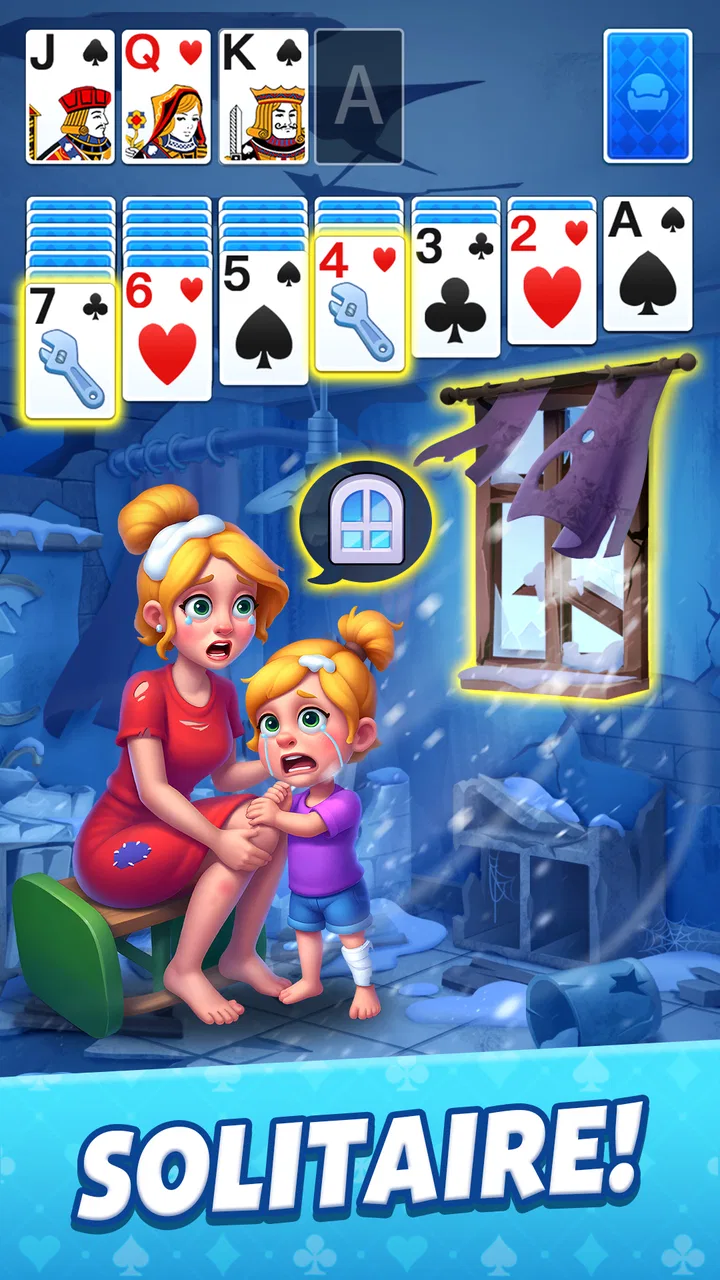
The store presents it as “Solitaire Story,” and that is a useful way to understand its tone. This is not merely a bare card table with no surrounding purpose. The game frames the activity around kindness and helping others, which gives progress a warmer atmosphere than a purely mechanical win counter. I found that especially helpful during short sessions, because even a few minutes felt like part of a larger journey rather than an isolated deal.
Its broad audience is reflected in the Everyone age rating. Parents looking for a calm card game may appreciate the approachable subject matter, while older players can enjoy the familiar rhythm without needing fast reactions. The game is also free to download, so trying it involves little commitment at the start. That said, free access does not mean the experience is completely without commercial pressure: optional in-app purchases range from $0.99 to $69.99 per item.
Why the first week can feel more rewarding than ordinary solitaire
During the first week, the story framing does much of the work. A standard solitaire app can be pleasant, but after several deals the activity may feel like repeating the same task with a different arrangement of cards. Solitaire Story adds a reason to care about continuing. The charitable theme does not transform the rules into a new genre, but it changes the emotional context around those rules.
That distinction is important. I would not install this expecting a rich narrative adventure with elaborate characters or a dramatic plot. The appeal is quieter: the cards remain the main activity, while the surrounding theme encourages me to keep going. Players who enjoy gentle progression and a positive atmosphere are likely to connect with it faster than players who only want the fastest possible deal and restart button.
A useful first-week routine is to treat it as a reset between demanding tasks. I might play one or two rounds after answering messages, before starting dinner, or while waiting for an appointment. Because solitaire is turn-based, I can pause mentally without worrying about losing a competitive match. The charitable framing also makes the game feel less empty during those small intervals, although the core satisfaction still comes from making sound card decisions and completing a deal.
What to check before making it a daily habit
My advice is not to judge the game solely by its opening mood. The first sessions benefit from novelty, and almost any well-presented solitaire title can feel fresh for a few days. The more revealing test is whether the basic card loop remains satisfying once the theme becomes familiar.
Before committing to regular play, I would also decide how comfortable I am with optional purchases. A free game with purchasable items can be perfectly enjoyable without spending, but the presence of larger purchase options means I would avoid tapping through menus casually. If the goal is a low-cost time filler, keeping a personal spending boundary from the beginning is sensible. The game is easiest to recommend to people who can enjoy the free portion without feeling that every piece of progress should be accelerated.
Month-to-month value comes from routine, not novelty
After the first month, the important question changes from “Is this pleasant?” to “Do I still have a reason to open it?” For me, Solitaire Story’s lasting value depends on whether I want a calm, repeatable card ritual. It is not the kind of game I would play for hours every day. Its better use is as a dependable companion for short sessions, especially when I want a familiar challenge without the social pressure of multiplayer.
The game’s 4.8 average rating from around 14 thousand ratings suggests that many players find this blend appealing. More than a million installs also show that it has reached a substantial audience. Those figures do not guarantee that every player will enjoy the same rhythm, but they do indicate that the combination of classic solitaire and an uplifting theme has broad appeal.
For month-to-month use, I would build a small habit around it rather than force long sessions. One practical approach is to play only when I have a natural pause: with morning coffee, during a lunch break, or at the end of the day when I want to reduce screen intensity. This protects the game from becoming another endless feed. Solitaire works best when it stays bounded, and the app’s format suits that kind of deliberate use.
Who is likely to keep it installed?
I can see it earning permanent space on the phone of someone who enjoys classic card games but wants a little more warmth and context than a plain digital deck provides. It is also a good fit for people who prefer solo play, dislike time limits, and want an activity that can be stopped without consequence. The Everyone rating makes it broadly approachable, and the compassionate theme may appeal to players who like their casual entertainment to carry a positive message.
It is less suitable for someone seeking serious card mastery, tournament-style competition, or a constantly changing set of mechanics. Experienced solitaire players who already have a favorite app may find that the story layer is not enough to justify switching. Likewise, players who dislike in-app purchase prompts or prefer a one-time paid product should examine the way the free experience feels before settling in for the long term.
A realistic everyday scenario
Imagine having fifteen minutes before leaving for work. A social game would demand attention from other people, a puzzle game might require remembering a complex objective, and a video could leave you passively scrolling. Solitaire Story fits the middle ground: I can start a deal, make a few careful moves, and stop when the time is up. If the round ends naturally, that is satisfying; if it does not, the activity still feels easy to resume later.
Another useful scenario is winding down without choosing something emotionally heavy. The helping-others theme gives the game a gentler tone, while the card layout keeps my attention occupied. I would still avoid playing late into the night if I am trying to reduce screen time, but compared with an endless social feed, a contained solitaire session is easier to manage. The key is to use it intentionally rather than let the next round decide when the break ends.
Maintenance is light, but attention still has a cost
From a practical standpoint, the current version is 3.20.2 and supports devices running Android 6.0 or later. That makes it accessible on many older Android phones, which is useful for a straightforward card game that does not need to be treated like a demanding visual showcase. I would still keep the app updated when convenient, since current versions generally provide the smoothest experience and avoid compatibility surprises.
The maintenance burden is not only technical. The bigger question is whether the game asks too much of my attention through repeated sessions, progression prompts, or purchase opportunities. Even a relaxing solitaire title can become tiring if I feel pushed to continue after I have had enough. My preferred approach is to keep notifications and spending decisions under control, then let the game remain a choice rather than a daily obligation.
There is also a storage and home-screen consideration that people often overlook. A simple card game earns its place when I open it regularly, not merely because it was enjoyable once. I would give it a trial period, notice whether I return naturally, and remove it if the compassionate theme no longer adds anything. Keeping an app installed out of habit is not the same as finding recurring value in it.
The main sources of fatigue
The first potential source of fatigue is repetition. Solitaire is intentionally repetitive, and that is both its comfort and its limitation. If I need constant surprises, changing objectives, or strong competition, the same basic card structure will eventually feel narrow. The story layer can make the routine more meaningful, but it cannot remove the fact that the central action remains solitaire.
The second issue is the difference between emotional framing and mechanical depth. A positive theme can encourage me to return, yet it does not automatically create more interesting decisions. Players who enjoy analyzing probabilities, experimenting with advanced variations, or comparing performance may eventually want a more specialized solitaire experience. In that situation, a dedicated strategy-focused alternative would be a better choice than expecting this game to become something it is not.
Purchases are another point to watch. The lower-priced option begins at $0.99, while individual items can reach $69.99. I would not assume that spending is necessary to enjoy the game, but I would treat the purchase system as a reason to play with awareness. Anyone sharing a device with children should be especially careful about account settings and approval habits. The Everyone rating describes the content audience, not a promise that every player will make the same spending choices.
There is also a subtler kind of fatigue: the theme may feel less distinctive once I have seen it repeatedly. In the beginning, the idea of helping people in need gives the game a memorable voice. Over time, the value depends on whether that message continues to complement the card play rather than becoming background decoration. For me, the theme works best as a gentle reminder of purpose, not as the only reason to keep tapping.
How it compares with the usual solitaire choices
Compared with a bare-bones classic solitaire app, Solitaire Story offers more atmosphere and a clearer emotional identity. A minimalist alternative may be better if I want instant access, fewer surrounding elements, and nothing competing with the cards. Solitaire Story is the stronger choice when I want the familiar game wrapped in a softer, more encouraging setting.
Compared with competitive card games, it is calmer and less demanding. There is no need to coordinate with teammates or react to an opponent’s move, which makes it better for private downtime. The trade-off is that it may not deliver the adrenaline or skill comparison that keeps competitive players engaged for months.
Compared with premium solitaire games, the free entry point is attractive, but optional purchases change the ownership feeling. A paid alternative can be preferable for someone who wants a clearly defined purchase and minimal commercial friction. On the other hand, Solitaire Story lets curious players try its approach before deciding whether it belongs in their routine. That makes the choice less about which app is universally best and more about whether I value free access and compassionate framing over a simpler, more self-contained product.
Small habits that improve the long-term experience
I get more from the game when I decide the length of a session before opening it. Setting a one-deal rule, a short timer, or a clear stopping point prevents the familiar “just one more” cycle from taking over. This is especially useful because solitaire is easy to start and difficult to notice passing time in.
I also recommend separating emotional enjoyment from purchase decisions. If a story moment or helping theme makes me feel positive, I should still wait before buying anything and ask whether the item improves the actual card experience. That simple pause protects the game’s role as inexpensive relaxation rather than turning a good mood into an impulse purchase.
Finally, I would rotate it with other activities instead of demanding that it provide all my entertainment. It works well between reading, walking, music, or a more demanding game. Used this way, its familiar structure remains comforting rather than stale. The game does not need to reinvent solitaire every month to be worthwhile; it needs to remain easy to return to when its particular kind of calm is what I want.
My long-term verdict
Solitaire Story earns lasting space for the right player, but not because it overwhelms the genre with complexity. Its strength is the combination of accessible solitaire, a compassionate theme, and a low-pressure format that fits ordinary gaps in the day. I appreciate that it can be enjoyed as a quiet solo activity and that its subject matter gives the familiar card loop a little more heart.
I would recommend it to anyone who wants a free solitaire game with a positive atmosphere and enough surrounding purpose to make repeated sessions feel less anonymous. I would be more cautious with players who dislike in-app purchases, need constant mechanical variety, or already prefer a highly polished premium solitaire experience. For them, the novelty may fade before the habit becomes worthwhile.
My final view is that the game succeeds when treated as a modest daily companion, not as an all-day destination. Its first-week appeal is immediate, its month-to-month value comes from manageable routines, and its main weakness is the unavoidable repetition of the genre. If you keep sessions intentional and remain thoughtful about optional spending, Solitaire Story can remain a pleasant part of a phone library long after the initial curiosity has passed.
FAQs for Solitaire Story
01What is Solitaire Story and how does it differ from classic solitaire?
Solitaire Story is an engaging twist on the classic solitaire card game. It combines traditional solitaire gameplay with exciting story elements and vibrant graphics. Players progress through various levels, each with unique challenges and themes. Unlike classic solitaire, Solitaire Story includes power-ups and special cards that enhance the gaming experience.
02Is Solitaire Story available for both Android and iOS devices?
Yes, Solitaire Story is available for download on both Android and iOS platforms. You can find it on the Google Play Store for Android devices and the Apple App Store for iOS devices. Ensure your device meets the minimum operating system requirements for the best experience.
03Are there in-app purchases in Solitaire Story, and are they necessary?
Solitaire Story offers in-app purchases that allow players to buy additional power-ups and boosts. While these purchases can enhance gameplay and help you progress faster, they are not necessary to enjoy the game. Players can still complete levels and enjoy the full experience without spending money.
04Does Solitaire Story require an internet connection to play?
Solitaire Story can be played offline, making it a great option for users who want to enjoy the game without an internet connection. However, certain features like leaderboards and updates might require internet access, so connecting periodically is recommended for the best experience.
05Is Solitaire Story suitable for children, and what is the recommended age?
Solitaire Story is suitable for players of all ages, including children. The game features simple controls, colorful graphics, and a user-friendly interface. However, due to in-app purchase options, it's advisable for parents to monitor their children's gameplay and spending habits. The game is generally recommended for ages 4 and up.
Pros
- Engaging gameplay with varied challenges.
- Beautiful graphics and smooth animations.
- Daily rewards keep players coming back.
- Offline mode available for on-the-go play.
- Intuitive interface for easy navigation.
Cons
- Ads can be intrusive at times.
- Limited free hints available.
- Long load times on older devices.
- In-app purchases can add up quickly.
- Some levels feel repetitively designed.

Solitaire Story
Gallery